
The Magic of the Golden Hour, Every Night
Imagine driving up to your home after a long day at the office. As the sun dips below the horizon, your house doesn’t just disappear into the shadows. Instead, it transforms. Soft, warm beams of light catch the texture of the stone siding, a gentle glow guides you up the driveway, and your favorite architectural features are highlighted like a piece of art in a gallery. This isn’t just about visibility; it’s about creating an experience. Custom exterior lighting is the secret ingredient that turns a beautiful modern house into a breathtaking home.
SUBMIT YOUR DETAILS FOR
For many homeowners, the focus is often on the interior—the kitchen islands, the hardwood floors, and the minimalist furniture. But the exterior is the face your home presents to the world. Modern architecture, characterized by its clean lines, open spaces, and unique materials, demands a lighting strategy that is just as sophisticated. In this guide, we’ll walk through the journey of designing custom exterior lighting that enhances your home’s aesthetic while providing safety and functionality.
Understanding the Layers of Light
In the world of professional lighting design, we don’t just “turn on a light.” We layer it. Just as a painter uses different brushes to create depth, you should use different types of lighting to create a cohesive look for your modern home. Here are the three primary layers you need to consider:
1. Ambient Lighting (The Base Layer)
Ambient lighting provides the general illumination for your outdoor spaces. It’s the “safety net” that allows you to see where you’re walking and prevents the yard from feeling like a dark abyss. For a modern home, this usually involves subtle fixtures like recessed soffit lights or wall-mounted sconces that cast a wide, soft glow.
2. Task Lighting (The Functional Layer)
Task lighting is all about utility. Think about the areas where you perform specific actions: the outdoor kitchen, the stairs leading to the front door, or the keypad on the garage. These areas require brighter, more focused beams. In modern design, task lighting is often hidden—think LED strips under the tread of each stair or sleek, integrated lights under a patio counter.
3. Accent Lighting (The “Wow” Factor)
This is where the storytelling happens. Accent lighting is used to draw the eye to specific features. Do you have a stuing Japanese Maple in the front yard? An uplight will make it pop. Is your home’s facade made of beautiful reclaimed wood? Graze the wall with light to emphasize the texture. Accent lighting adds drama and personality to your property.
Highlighting Modern Architecture
Modern homes often feature unique elements like cantilevered roofs, large glass walls, and industrial materials like steel and concrete. Lighting these features requires a “less is more” approach. The goal is to complement the geometry, not overwhelm it.
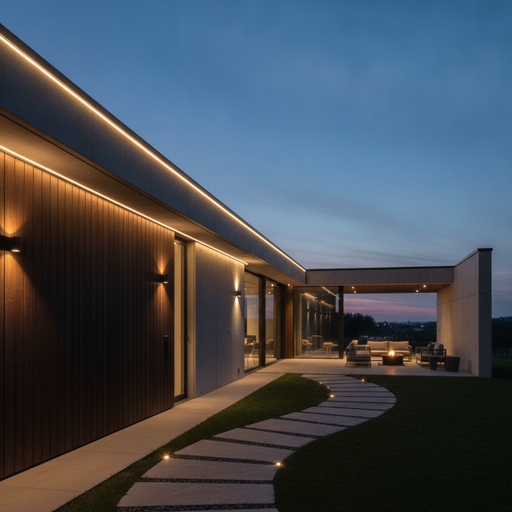
One popular technique for modern homes is Linear Lighting. Using long, thin LED strips along the roofline or the edge of a deck reinforces the horizontal lines that are so prevalent in contemporary design. It creates a futuristic, sleek look that feels integrated into the structure rather than tacked on.
Another essential technique is Uplighting and Downlighting. Uplighting involves placing fixtures at the base of a wall or tree and pointing them upward. This creates a sense of grandeur and height. Downlighting, often called “moonlighting,” involves placing lights high up in trees or under eaves to create a soft, natural glow on the ground below. When combined, these techniques create a balanced, three-dimensional look.
The Rise of Smart Outdoor Lighting
We live in an era where our homes are getting smarter, and exterior lighting is no exception. Custom lighting systems for modern homes are now frequently integrated into smart home ecosystems like Lutron, Crestron, or even DIY-friendly platforms like Philips Hue.
Why choose smart lighting? It offers unparalleled control. You can program your lights to slowly dim as the evening progresses, or change the color temperature from a crisp “cool white” for a summer party to a “warm amber” for a cozy winter evening. Many systems also include geofencing, meaning your lights will automatically turn on as your car enters the driveway, welcoming you home safely without you ever having to flip a switch.
Lighting for Outdoor Living Spaces
The modern home often blurs the line between indoors and outdoors. Patios, decks, and poolside lounges are treated as extensions of the living room. To make these spaces usable after dark, the lighting needs to be inviting.
- Bistro Lighting: While traditional, high-quality “Edison” style string lights can add a touch of warmth to a modern patio, provided they are hung with clean, intentional lines.
- In-Ground Well Lights: These are perfect for highlighting paths or the perimeter of a deck without creating a tripping hazard.
- Fire Features: Don’t forget that fire is a light source! A modern fire pit provides a natural, flickering focal point that complements your electric lighting scheme.
Sustainability and Dark Sky Compliance
As responsible homeowners, we must consider the environment. Modern lighting design is moving toward sustainability. LED technology is now the industry standard, consuming significantly less energy and lasting much longer than traditional halogen bulbs.
Furthermore, many modern lighting designs now prioritize “Dark Sky Compliance.” This means using fixtures that are shielded to direct light downward rather than up into the atmosphere. This reduces light pollution, protects local wildlife, and ensures that you can still see the stars from your backyard. It’s a win-win for your home and the planet.
Plaing Your Project: Professional vs. DIY
While it’s tempting to head to a big-box store and buy a few solar stakes, custom exterior lighting for a modern home is an investment that usually benefits from a professional touch. A lighting designer understands voltage drop, beam angles, and how different materials reflect light. They can create a cohesive plan that avoids “hot spots” (areas that are too bright) and “dead zones” (areas that are too dark).
However, if you are a DIY enthusiast, start small. Focus on one area—like the front walkway—and experiment with temporary fixtures to see how the light interacts with your home’s surfaces before committing to a permanent installation.
Conclusion: Your Home, Reimagined
Custom exterior lighting is more than just a home improvement project; it is a way to breathe life into your property after the sun goes down. By carefully layering ambient, task, and accent lighting, and utilizing modern technology, you can highlight the architectural beauty of your home while creating a safe and welcoming environment.
Remember, the best lighting isn’t necessarily the brightest. It’s the lighting that tells a story, creates a mood, and makes you feel a sense of pride every time you pull into your driveway. Whether you’re looking to boost your curb appeal or create a private backyard sanctuary, the right light can make all the difference. It’s time to step out of the shadows and let your modern home shine.