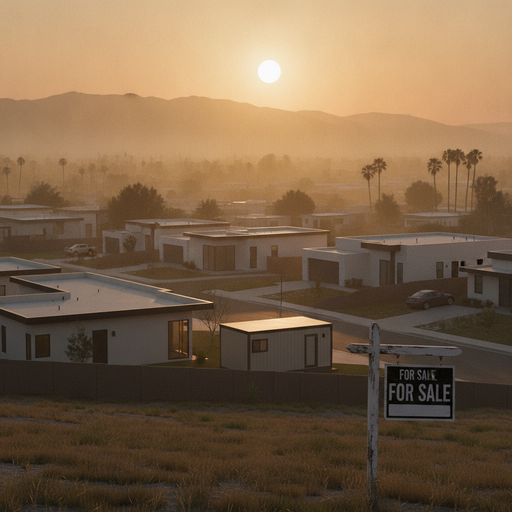

For decades, the “California Dream” has been a siren song for millions—a promise of golden sunshine, boundless iovation, and a lifestyle that blends coastal relaxation with urban opportunity. But for many modern Californians, that dream is increasingly hitting a cold, hard wall of reality: the housing market. From the fog-draped streets of San Francisco to the sprawling suburbs of the Inland Empire, the conversation at dier tables isn’t just about the weather or the latest tech trends; it is about the astronomical cost of having a roof over one’s head.
SUBMIT YOUR DETAILS FOR
To understand the California housing crisis, we have to look beyond the mere numbers on a listing site. We have to look at the people. Take Sarah, for example, a dedicated middle school teacher in San Jose. Despite earning what would be considered a comfortable upper-middle-class salary in most other states, Sarah finds herself living with two roommates at the age of 34. For her, the idea of owning a home—even a modest condo—feels less like a financial goal and more like a lottery win. Sarah’s story isn’t an anomaly; it is the new standard for a generation of workers in the Golden State.
The Stark Reality of the Numbers
According to the California Association of Realtors, the median price of a single-family home in California has frequently hovered around the $800,000 to $900,000 mark in recent years, often peaking even higher in coastal hubs. To put that into perspective, only about 15% to 18% of California households can actually afford to purchase a median-priced home. This creates a massive gap between the workforce the state needs to function and the people who can actually afford to live there.
The affordability crisis isn’t just a hurdle for prospective buyers; it’s a weight on the shoulders of renters too. In cities like Los Angeles and San Diego, it is common for residents to spend 40% or even 50% of their gross income on rent. This “rent-burdened” status leaves little room for savings, healthcare, or retirement, creating a cycle of financial fragility that ripples through the entire state economy.
Why Is California So Expensive? The Supply and Demand Tangle
At its core, California’s housing problem is a simple issue of supply and demand, complicated by decades of policy and geography. For the last thirty years, California has simply not built enough housing to keep up with its population and job growth. While tech booms and entertainment surges brought hundreds of thousands of new residents to the state, the construction of new homes lagged behind.
Several factors contribute to this “housing deficit”:
- Restrictive Zoning: In many California cities, the vast majority of residential land is zoned exclusively for single-family homes. This prevents the construction of “missing middle” housing, such as duplexes, townhomes, and small apartment buildings that could house more people in less space.
- Environmental Regulations: While the California Environmental Quality Act (CEQA) was designed with noble intentions to protect the state’s natural beauty, it has frequently been used by local groups to stall or block new housing developments through lengthy litigation.
- The NIMBY Phenomenon: “Not In My Backyard” (NIMBY) sentiment remains a powerful force. Long-time homeowners often resist new developments, fearing they will change the “character” of the neighborhood or decrease property values.
- High Construction Costs: Between labor shortages, expensive permits, and the rising cost of materials, it simply costs more to build in California than almost anywhere else in the country.
The Geographic Shift: Looking Inland
As coastal prices reached the stratosphere, a significant migration began. Families who found themselves priced out of Orange County or the Bay Area started looking toward the “Inland Empire”—counties like Riverside and San Bernardino—and the Central Valley. This shift has transformed cities like Sacramento and Fresno into some of the most competitive real estate markets in the nation.
This inland migration offers a temporary reprieve for some, but it comes with its own set of challenges. Long-distance “super-commutes” have become common, with workers driving two hours or more each way to reach their jobs in the coastal tech or financial hubs. This not only degrades the quality of life for families but also contributes to increased carbon emissions and traffic congestion, highlighting how housing affordability is deeply intertwined with environmental and infrastructure issues.
Policy Interventions: Is Help on the Way?
Recognizing the severity of the crisis, the California legislature has recently passed several landmark bills aimed at boosting production. One of the most talked-about is Senate Bill 9 (SB 9), which effectively ended single-family-only zoning by allowing homeowners to build up to four units on a single-family lot under certain conditions.
Furthermore, the “ADU Revolution” is in full swing. Accessory Dwelling Units—often called “gray flats” or “backyard cottages”—have become much easier to permit. In cities like Los Angeles, ADUs now account for a significant portion of all new housing permits. These small units provide a way for homeowners to generate extra income while adding much-needed rental stock to the market.
However, critics argue that these measures are just a drop in the bucket. They point to Proposition 13, the 1978 tax initiative that caps property tax increases, as a double-edged sword. While it keeps taxes predictable for long-time owners, it also discourages people from moving (the “lock-in effect”) and limits the tax revenue available for local infrastructure that supports new housing.
The Human Impact and the Future of the State
The most heartbreaking aspect of the affordability crisis is its impact on the state’s social fabric. We are seeing a “brain drain” of young professionals, teachers, and service workers who are moving to states like Texas, Arizona, and Nevada in search of a lower cost of living. When the people who teach the children, nurse the sick, and run the local businesses cao longer afford to live in the community, the community itself begins to erode.
Yet, there is a glimmer of hope. The rise of remote work has decoupled some jobs from specific high-cost locations, giving workers more flexibility. Additionally, the growing “YIMBY” (Yes In My Backyard) movement—led by young activists—is successfully pushing for denser, transit-oriented developments that could revitalize urban centers.
What Can Prospective Residents Do?
If you are currently navigating the California housing market, the key is flexibility and education. Here are a few strategies being used by modern Californians:
- Exploring Emerging Markets: Looking at neighborhoods on the edge of revitalization or smaller inland cities that still offer high quality of life.
- House Hacking: Buying a property with an ADU or extra rooms to rent out to offset the high mortgage costs.
- First-Time Buyer Programs: Utilizing state-sponsored programs like the “California Dream for All” shared appreciation loan, which helps with down payments.
Conclusion
The story of California housing affordability is a complex narrative of ambition, policy failure, and resilience. The “California Dream” isn’t dead, but it is certainly evolving. It is no longer just about a sprawling house with a white picket fence; it’s about finding creative ways to live in one of the most beautiful and economically dynamic places on Earth.
Solving the crisis will require a sustained, multi-pronged approach: cutting red tape, incentivizing affordable construction, and rethinking how we use our land. Until then, Californians will continue to do what they have always done—iovate, adapt, and keep searching for that golden place to call home. Whether you are a lifelong resident or a newcomer, understanding these market insights is the first step in making your own California dream a reality.