
The Timeless Appeal of the Ranch Style Home
Imagine pulling into your driveway after a long day. The sun is begiing to set, casting a warm, golden glow over a house that sits low and wide against the horizon. There are no towering pillars or dizzying heights here; instead, there is a sense of groundedness, a coection to the earth that feels both nostalgic and refreshingly modern. This is the magic of the ranch-style home. Born in the 1930s and exploding in popularity during the post-war suburban boom, the ranch house—or “rambler”—was designed for easy living, indoor-outdoor flow, and a casual lifestyle.
SUBMIT YOUR DETAILS FOR
Today, ranch homes are seeing a massive resurgence. Homeowners are rediscovering the beauty of their simple silhouettes and the incredible potential of their outdoor spaces. Because ranch homes are typically single-story and spread out across a lot, they offer a unique canvas for outdoor design that multi-story homes simply can’t match. Whether you are looking to boost your curb appeal or create a private backyard sanctuary, mastering the outdoor design of a ranch-style home is all about emphasizing that iconic horizontal line while introducing modern textures and functionality.
Emphasizing the Horizontal: The Core of Ranch Design
The most defining characteristic of a ranch home is its long, low profile. When designing the exterior, your primary goal should be to lean into this linearity rather than fighting against it. Traditional landscaping often tries to “heighten” a house with tall trees at the corners, but for a ranch, this can sometimes make the house look squashed. Instead, look for ways to celebrate the length.
Consider long, low retaining walls made of stacked stone or poured concrete. These walls can follow the line of the house, creating tiered garden beds that add depth without obstructing the view of the architecture. In terms of plantings, ornamental grasses like Blue Oat Grass or Peisetum are perfect. They provide movement and texture while staying relatively low, mimicking the breeze-swept look of the Western prairies where the ranch style originated.
Boosting Curb Appeal: The Front Yard Transformation
The front of a ranch house often features a large expanse of roof and a long stretch of siding. To make this look intentional and stylish, you need to create a focal point. Usually, this is the entryway. Many original ranch homes have a recessed front door that can feel a bit dark or hidden. You can modernize this by using a bold accent color for the door—think teal, mustard yellow, or a deep charcoal—and upgrading the surrounding hardware.
Widening the walkway is another pro move. Instead of a narrow concrete path, consider large-scale pavers with “steppable” ground cover like creeping thyme or moss growing in between. This creates a more organic, modern look. Lighting also plays a crucial role. Linear LED path lights can guide guests to the door, while up-lighting on a few select architectural features or specimen trees can add drama after the sun goes down.
Seamless Transitions: The Indoor-Outdoor Flow
One of the original selling points of ranch homes was the “atomic age” idea of bringing the outside in. Large picture windows and sliding glass doors were staples of the design. To take this to the next level, your outdoor design should feel like a literal extension of your living room.
If you have a sliding door leading to the backyard, try to match the level of your outdoor patio as closely as possible to your indoor flooring. Using similar colors or materials—such as a grey slate tile inside transitioning to a grey stone paver outside—tricks the eye into seeing one continuous space. This “vanishing threshold” makes both your interior and exterior feel significantly larger.
Creating a Backyard Oasis: Zoning and Functionality
Because ranch homes often sit on wider lots, you likely have more “horizontal” backyard space to work with. The best way to manage this is through zoning. Rather than having one giant sea of grass, divide your outdoor space into “rooms” based on how you want to live.
- The Dining Zone: Place this closest to the kitchen. A pergola or a modern slat-style patio cover can provide shade while maintaining that breezy, open feel.
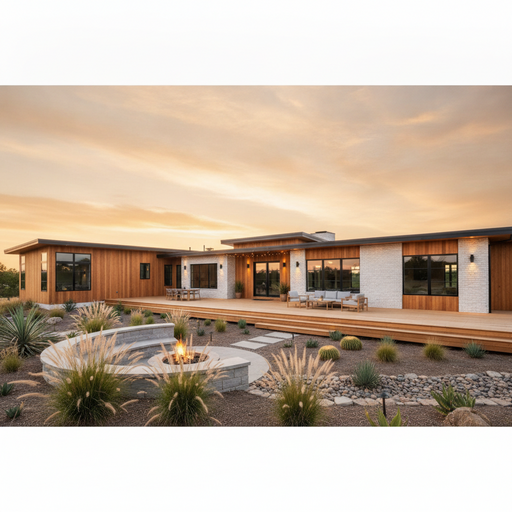
- The Lounge Zone: This is where the fire pit lives. For a ranch home, a sunken fire pit area fits the low-profile aesthetic perfectly, creating a cozy, intimate spot that doesn’t break the sightlines of the yard.
- The Recreation Zone: Whether it’s a small putting green, a stock tank pool, or a simple vegetable garden, keep these areas toward the perimeter to maintain an open center.
Materials and Textures: The Modern Ranch Palette
To move your ranch home away from the “dated 1960s” look and into the modern era, you must be thoughtful about materials. The original ranch often used brick or simple wood siding. You can elevate this by mixing textures.
Consider adding a section of vertical cedar siding to contrast with the horizontal lines of the rest of the house. Natural stone, smooth-finished concrete, and black metal accents (like window frames or railings) provide a sophisticated, contemporary edge. When it comes to color, many designers are moving toward “Modern Farmhouse” or “Mid-Century Modern” palettes. This means whites, creams, and warm wood tones, or darker, “moody” exteriors like navy or forest green with natural wood accents.
Sustainability and Low-Maintenance Landscaping
The ranch lifestyle is supposed to be relaxed, which means you don’t want to spend every weekend mowing and weeding. Xeriscaping is a fantastic option for ranch-style homes. By using drought-tolerant plants, gravel mulch, and boulders, you can create a high-impact, low-water landscape that looks architectural and clean.
Incorporate native plants that thrive in your specific climate. Not only do they require less care, but they also support local pollinators. For a ranch home, mass plantings—where you plant large groups of the same species together—create a clean, modern look that complements the home’s simple geometry.
The Final Touch: Lighting the Landscape
Never underestimate the power of a good lighting plan. For a ranch-style home, you want to avoid “hot spots” of bright light. Instead, aim for a soft, layered glow. Use wash lights to highlight the texture of your brick or stone walls. Use “moonlighting” techniques by placing lights high in trees to cast a soft, natural glow downward. This accentuates the sprawling nature of your property and ensures that your outdoor design is just as beautiful at 10 PM as it is at 10 AM.
Conclusion: Living the Ranch Dream
Designing the outdoor space for a ranch-style home is a journey in balance. It is about honoring the past while embracing the needs of the modern family. By focusing on horizontal lines, creating a seamless flow between the interior and exterior, and choosing a sophisticated palette of materials, you can transform a simple one-story house into a stuing architectural statement. The ranch home was built for the easy life—make sure your outdoor design reflects that sense of freedom, comfort, and coection to the world around you.