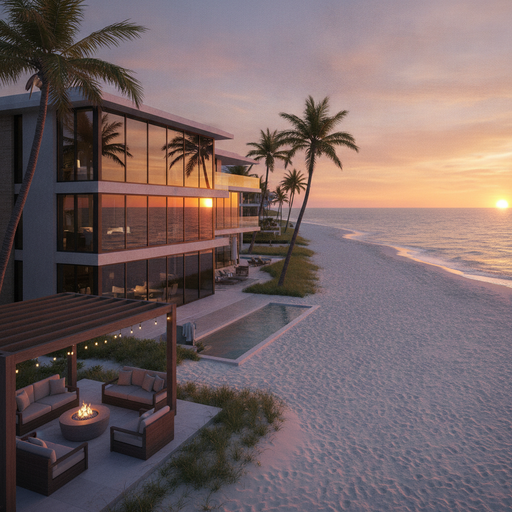

The Eternal Allure of the Sunshine State
Imagine waking up to the gentle rhythm of waves lapping against the shore, a warm salty breeze drifting through your window, and a horizon painted in hues of orange and pink. For many, this isn’t just a vacation daydream—it is the ultimate lifestyle goal. Florida has long been the “promised land” for those seeking escape from gray skies and frantic city pulses. However, in recent years, the desire for a piece of the Florida coastline has transformed from a steady stream into a tidal wave of demand.
SUBMIT YOUR DETAILS FOR
If you have looked at the real estate market lately, you know that Florida’s beachfront properties are among the most coveted assets in the world. But what exactly is driving this relentless surge? It isn’t just about the weather anymore. A perfect storm of economic shifts, lifestyle changes, and psychological desires has turned the Florida coast into a high-stakes arena for homeowners and investors alike. Let’s dive into the story of why Florida’s sands are currently worth their weight in gold.
A Great Migration Driven by Freedom and Finance
The story of the current demand spike begins with a massive shift in how and where Americans choose to live. Over the last few years, we have witnessed a “Great Migration” toward the Sunbelt, with Florida leading the charge. This movement was initially sparked by a desire for more space and fewer restrictions, but it quickly evolved into a calculated financial move for thousands of families and professionals.
One of the biggest magnets is Florida’s tax-friendly environment. In a world where every pey counts, the absence of a state income tax is a massive incentive. For high-earners moving from states like New York, New Jersey, or California, the savings alone can often cover a significant portion of a mortgage on a luxury beachfront condo. When you combine those tax savings with a year-round outdoor lifestyle, the decision to relocate becomes a “no-brainer.”
The Rise of the Remote Work Revolution
Before 2020, owning a beachfront home in Florida was often reserved for the retired or those who only visited for a few weeks a year. The “office” was a physical anchor that kept people tied to metropolitan hubs. But the world changed. The rise of remote and hybrid work dismantled those anchors, allowing professionals to trade their cubicles for cabanas.
Suddenly, “Zoom with a view” became the new status symbol. Why live in a cramped apartment in a cold climate when you can attend a board meeting from your balcony overlooking the Gulf of Mexico? This shift has brought a younger, more active demographic to the Florida coast, further fueling the demand for properties that offer both high-speed coectivity and immediate beach access.
Scarcity: They Aren’t Making Any More Beach
In economics, value is often driven by the simple law of supply and demand. In Florida, the supply of beachfront land is fundamentally limited. While the state boasts over 1,300 miles of coastline, only a fraction of that is available for residential development. Between protected state parks, commercial zones, and existing infrastructure, the “inventory” of true beachfront property is finite.
This scarcity creates a sense of urgency. Investors and homebuyers realize that as more people move to the state, the opportunities to own a home directly on the sand are shrinking. Unlike inland suburbs where developers can keep clearing land and building new phases, the beach is the end of the line. This geographic “bottleneck” ensures that beachfront property remains a premium commodity, driving prices upward even when the broader real estate market faces headwinds.
The Investment Potential: More Than Just a Pretty View
While many buyers are looking for a primary residence, a significant portion of the demand comes from savvy investors. Florida is a global tourism powerhouse, and beachfront properties are the crown jewels of the short-term rental market. Platforms like Airbnb and VRBO have made it easier than ever for owners to monetize their coastal homes when they aren’t using them.
The ROI (Return on Investment) for a well-located Florida beach house can be staggering. High occupancy rates during the winter “snowbird” season and the summer vacation rush provide a dual-peak income stream that few other markets can match. Furthermore, even with market fluctuations, Florida coastal real estate has historically shown strong long-term appreciation. For many, a beach house is a “safe haven” asset—a tangible piece of the earth that offers both utility and capital growth.
Regional Hotspots: From the Atlantic to the Gulf
The demand isn’t uniform across the state; different regions offer different “vibes” that appeal to various buyer profiles. On the Atlantic side, places like Palm Beach and Miami remain the epicenters of luxury and high-energy living. Here, the demand is driven by international wealth and a fast-paced lifestyle.
Conversely, the Gulf Coast—areas like Naples, Sarasota, and the 30A corridor in the Panhandle—attracts those looking for a more relaxed, “Old Florida” feel. The white, sugary sands and calmer waters of the Gulf are particularly popular with families and those seeking a quieter retreat. Despite their differences, both coasts share one commonality: a desperate shortage of available listings compared to the number of eager buyers.
Navigating the Challenges: Insurance and Resilience
It wouldn’t be a complete story without addressing the “elephant in the room”: the challenges of coastal living. Living on the edge of the ocean comes with risks, primarily in the form of hurricanes and rising insurance premiums. The Florida insurance market has undergone significant changes recently, with costs increasing and some carriers pulling out of the state.
Interestingly, this hasn’t dampened demand as much as some predicted. Instead, it has shifted the *type* of demand. Modern buyers are now looking for “resilient” luxury. There is a high premium on homes built to the latest hurricane codes, featuring impact-resistant glass, elevated foundations, and reinforced concrete construction. Buyers are becoming more educated, realizing that while the cost of ownership may be higher due to insurance, the lifestyle and appreciation potential still outweigh the risks for many.
The Emotional Coection: The “Blue Mind” Effect
Beyond the spreadsheets and the tax codes, there is a deeply human reason why Florida beachfront property demand remains so high. Scientists often refer to the “Blue Mind” effect—the documented sense of calm and well-being that humans experience when they are near, in, or under water.
In an increasingly digital and stressful world, the beach represents the ultimate “unplugged” experience. It is a place where kids can build sandcastles, where couples can walk at sunset, and where the stresses of the modern world seem to dissolve in the salt air. This emotional pull is powerful. People aren’t just buying a house; they are buying a feeling. They are buying the promise of a slower, more intentional life. As long as the ocean continues to call to the human spirit, the demand for Florida’s shores will never truly fade.
Conclusion: A Future Bright as the Florida Sun
The demand for Florida beachfront property is a complex tapestry woven from economic opportunity, a shift in work culture, and the timeless human desire for beauty and tranquility. While high prices and insurance costs present hurdles, the fundamental appeal of the Florida coast remains unshakable.
Whether it’s a high-rise condo in Miami or a beach cottage on St. George Island, these properties represent more than just real estate; they are symbols of a life well-lived. As we look toward the future, the “Sunshine State” is likely to keep its crown. For those lucky enough to secure a piece of the coast, the reward is a front-row seat to the best show on earth: the sun rising or setting over the endless blue horizon.