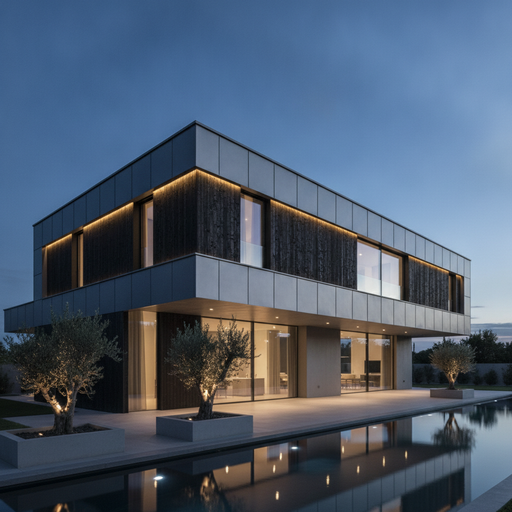

Imagine walking down a quiet suburban street where every house looks nearly identical—beige siding, standard brickwork, and predictable rooflines. Then, suddenly, you stop. Your eyes are drawn to a residence that defies the norm. It features sleek, vertical charred wood panels contrasted against cool, geometric zinc plates, all tied together with large glass spans. It doesn’t just look like a house; it looks like a piece of functional art. This is the power of modern custom exterior cladding.
SUBMIT YOUR DETAILS FOR
Cladding is more than just a protective skin for a building. In the world of modern architecture, it has become the primary language of design. It is the first thing people see, the texture they feel as they walk past, and the barrier that keeps the elements at bay. If you are plaing a new build or a major renovation, understanding custom cladding is your ticket to creating a home that reflects your personality while significantly increasing its long-term value.
What is Custom Exterior Cladding?
In simple terms, exterior cladding is an additional layer applied to the outside of a building’s structure. While its primary job is to protect the building from weather conditions like rain, wind, and UV rays, its secondary—and perhaps more exciting—job is aesthetic. “Custom” cladding takes this a step further by allowing homeowners and architects to mix materials, create unique patterns, and utilize non-traditional installation methods to achieve a look that can’t be found in a catalog.
Think of it as tailored clothing for your home. Just as a bespoke suit fits better and looks sharper than one off the rack, custom cladding ensures that every corner, shadow gap, and transition is perfectly aligned with the architectural vision of the property.
The Evolution of Modern Materials
We have come a long way from the days when the only choices were vinyl siding or red brick. Today’s custom designs often utilize a “mixed-media” approach, combining several materials to create visual depth. Here are some of the most popular materials used in modern custom designs:
1. Architectural Metal Panels
Metal is a favorite in modern design because of its clean lines and durability. Materials like aluminum, zinc, and copper offer a sleek, industrial aesthetic. Customization often comes in the form of “standing seam” panels or perforated metal sheets that play with light and shadow. Metal is incredibly low-maintenance and can be finished in hundreds of colors or left to develop a natural patina over time.
2. Natural and Modified Wood
Wood brings a warmth to modern architecture that stone or metal caot replicate. Modern designs often use Western Red Cedar or Redwood for their natural rot resistance. However, the “custom” trend has shifted toward modified woods like Accoya or Thermory, which undergo heat or chemical treatments to make them incredibly stable. Another massive trend is Shou Sugi Ban—the Japanese art of charring wood—which creates a beautiful, deep-black textured finish that is naturally resistant to fire and pests.
3. High-Pressure Laminates (HPL) and Fiber Cement
For those who want the look of wood or stone without the maintenance, HPL panels and fiber cement are the go-to choices. These materials are engineered to withstand extreme weather. The “custom” aspect here involves the way they are cut and mounted. Using visible rivets or creating intricate geometric patterns with different colored panels can turn a simple wall into a focal point.
4. Natural Stone and Ultra-Compact Surfaces
Stone has evolved from heavy blocks to thin, lightweight veneers. Large-format porcelain slabs and ultra-compact surfaces like Dekton are now being used as cladding. These materials allow for a seamless “monolithic” look where the walls appear to be carved from a single giant piece of rock.
Design Strategies for a Modern Look
When you decide to go custom, the possibilities can be overwhelming. To keep your design looking modern rather than cluttered, consider these professional design strategies:
- The Rule of Three: Limit yourself to three different materials or textures. For example, use dark metal for the ground floor, light wood for the cantilevered sections, and glass for the transitions. Any more than three can make the building look busy.
- Play with Orientation: Traditional siding is horizontal. Modern design often flips the script with vertical installation. Vertical cladding makes a building appear taller and more elegant. You can even experiment with diagonal patterns for a truly avant-garde feel.
- Shadow Gaps and Recesses: In modern design, the “empty space” is as important as the material itself. Using shadow gaps (small spaces between panels) creates crisp black lines that define the building’s geometry.
- Integrate Lighting: Custom cladding allows for integrated LED chaels. Lighting the texture of the cladding from below or within a recessed joint can make the house look spectacular at night.
The Functional Side: Why Beauty is Only Skin Deep
While we often focus on the looks, custom cladding serves several critical technical purposes. A well-designed system includes a “rainscreen” principle. This involves leaving a small cavity between the cladding and the actual wall of the house. This cavity allows for ventilation, ensuring that any moisture that seeps behind the panels can evaporate, preventing mold and rot within the structure.
Furthermore, custom cladding is a massive contributor to energy efficiency. By adding an extra layer of “outer insulation,” you reduce thermal bridging. This means your home stays cooler in the summer and warmer in the winter, leading to lower utility bills and a smaller carbon footprint.
The Journey of a Custom Project
If you are considering this for your own home, the process usually follows a specific path. It begins with an architectural consultation where the “vibe” of the house is established. Is it a “Forest Retreat” or an “Urban Fortress”?
Next comes the material selection. This is the most tactile part of the journey—holding samples of charred timber next to brushed aluminum to see how they catch the morning light. Once the materials are chosen, shop drawings are created. This is where the “custom” happens; every panel is measured to ensure it fits around windows and doors with millimeter precision.
Finally, installation is handled by specialists. Unlike standard siding, custom cladding often requires specialized mounting brackets and a deep understanding of thermal expansion (how materials grow or shrink in the heat). It is a meticulous process, but the result is a flawless, high-end finish.
Maintenance and Longevity
A common question is: “Will this look good in ten years?” The answer depends on the material. Metal and fiber cement are almost “set and forget.” Wood, however, is a living material. Some homeowners love the way wood silvers and weathers over time, seeing it as a sign of the house aging gracefully. If you prefer the “new” look, you will need to apply oils or sealants every few years. When choosing your custom design, always be honest with yourself about how much maintenance you are willing to perform.
Conclusion
Modern custom exterior cladding is the ultimate bridge between art and engineering. It allows you to protect your sanctuary while making a bold statement to the world. Whether you choose the charred textures of an ancient Japanese tradition or the sleek, futuristic lines of architectural metal, your home’s facade is your canvas.
By investing in high-quality materials and thoughtful, custom design, you aren’t just building a house; you are creating a landmark. You are ensuring that your home won’t just be another face in the crowd, but a standout example of modern living that provides comfort, efficiency, and beauty for decades to come.