
The Allure of the Sun-Drenched Horizon
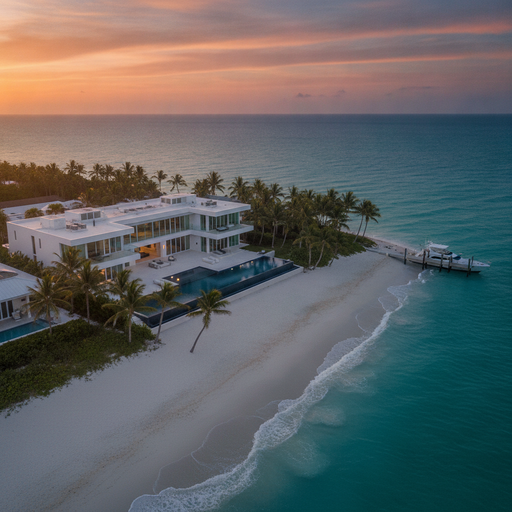
Imagine waking up to the rhythmic sound of waves gently crashing against the shore, a warm salty breeze drifting through your window, and the promise of three hundred days of sunshine a year. For decades, this dream has acted as a powerful magnet, drawing thousands of people to the Florida coastline. But in recent years, what used to be a steady stream of retirees has turned into a massive tidal wave of migration. The demand for Florida coastal housing has reached unprecedented heights, transforming the state’s real estate landscape into one of the most dynamic—and complex—markets in the United States.
SUBMIT YOUR DETAILS FOR
Walking through the streets of coastal towns like Naples, Sarasota, or West Palm Beach today, you can feel the energy. New developments are rising, historic bungalows are being meticulously renovated, and “Sold” signs seem to appear almost as soon as a property hits the market. But what exactly is driving this insatiable hunger for a piece of the Sunshine State? To understand the current demand, we have to look beyond just the beautiful beaches and dive into the cultural, economic, and social shifts that have redefined where and how Americans want to live.
The Great Migration: More Than Just Retirees
For a long time, the narrative of Florida real estate was simple: people worked their entire lives in the North, retired, and moved to Florida to play golf. While that demographic remains a cornerstone of the market, the profile of the average buyer has shifted dramatically. The catalyst, as with many things in the modern era, was the global shift toward remote work. Suddenly, the “where” of a job became less important than the “where” of one’s life.
Professionals in their 30s and 40s realized they no longer needed to endure grueling commutes iew York, Chicago, or San Francisco. If they could participate in a Zoom meeting from a home office overlooking the Gulf of Mexico, why wouldn’t they? This influx of younger, high-earning professionals has created a competitive environment for coastal properties that offer both luxury and coectivity. They aren’t just looking for a place to retire; they are looking for a place to raise families, build businesses, and enjoy an active lifestyle year-round.
The Financial Incentive: A Tax Haven by the Sea
While the lifestyle is a major draw, we caot overlook the cold, hard numbers. Florida remains one of the few states in the U.S. without a state income tax. For high-net-worth individuals and business owners moving from high-tax states like California or New Jersey, the savings are astronomical. In many cases, the money saved on state taxes alone is enough to cover a significant portion of a monthly mortgage on a premium coastal property.
This financial “carrot” has spurred a corporate migration as well. As major financial firms and tech companies open offices in Miami and Tampa—often dubbed “Wall Street South” and “Silicon Bay”—they bring with them thousands of employees who need housing. This corporate backing provides a level of stability to the housing demand that wasn’t as prevalent in previous decades. It’s not just a speculative bubble; it’s an economic relocation.
The Inventory Challenge: A Finite Supply of Paradise
Basic economics tells us that when demand is high and supply is low, prices rise. In the context of Florida’s coast, supply is naturally limited by geography. There is only so much beachfront and “near-beach” land available. This scarcity has led to a fierce competition for available lots and existing homes.
In many coastal communities, we are seeing a trend of “teardowns.” Buyers are purchasing older, smaller homes from the 1960s or 70s at premium prices, only to demolish them and build modern, storm-resistant luxury estates. This evolution of the housing stock is increasing property values across the board, but it also means that the entry point for living near the water is moving higher and higher. For the aspiring homeowner, the market requires quick decision-making and a solid financial strategy.
Navigating the Storm: Resilience and Insurance
It would be remiss to discuss Florida coastal housing without addressing the elephant in the room: the environment. Florida is on the front lines of climate change, facing threats from hurricanes and rising sea levels. However, rather than dampening demand, these challenges have sparked a revolution in building science and community plaing.
Modern coastal homes in Florida are now built to some of the strictest building codes in the world. From impact-resistant windows that can withstand hurricane-force winds to elevated foundations and advanced drainage systems, the “new” Florida home is a fortress of engineering. Buyers are increasingly prioritizing these resilient features, viewing them not just as safety measures, but as essential protections for their investment.
The insurance market, while currently facing its own set of challenges with rising premiums, is also a focal point of discussion. Despite the costs, the demand remains robust because, for many, the “lifestyle tax” of higher insurance is a price worth paying for the unparalleled quality of life that coastal Florida offers. People are choosing to adapt rather than retreat.
The Micro-Markets: From Miami Glamour to Panhandle Peace
The demand isn’t uniform across the state; Florida offers a diverse menu of coastal experiences.
- Southeast Florida (Miami, Fort Lauderdale, Palm Beach): This region remains the piacle of luxury and international appeal. It’s high-energy, cosmopolitan, and features some of the most expensive real estate in the world.
- The Gulf Coast (Naples, Sarasota, Tampa): Known for its calmer waters and spectacular sunsets, this area has seen an explosion in demand from families and those seeking a slightly more relaxed, yet sophisticated, lifestyle.
- The Emerald Coast (Destin, 30A, Panama City Beach): The Florida Panhandle has transformed from a regional vacation spot into a national destination. The “30A” corridor, in particular, is seeing unprecedented demand for its New Urbanism design and white-sand beaches.
- The Space Coast and First Coast (Melbourne, St. Augustine, Jacksonville): These areas offer a blend of history, aerospace iovation, and relatively more affordable coastal options compared to the southern hubs.
Investment Potential: Short-Term Gains vs. Long-Term Wealth
For investors, Florida’s coastal market offers a dual-threat advantage. On one hand, the short-term rental market (driven by platforms like Airbnb and VRBO) is incredibly lucrative. Florida remains one of the most visited places on Earth, and coastal vacation rentals often boast high occupancy rates and premium nightly prices.
On the other hand, the long-term appreciation of coastal land in Florida has historically outpaced many other regions. As the state’s population continues to grow—adding roughly 1,000 people per day—the long-term value of limited coastal assets is widely viewed as a “safe bet” for wealth preservation. Investors are no longer just looking for a quick flip; they are looking to hold property in a state that is actively positioning itself as a future-forward economic powerhouse.
Conclusion: The Future of the Florida Coast
As we look toward the future, the demand for Florida coastal housing appears to be more than just a passing trend. It is the result of a fundamental shift in how people prioritize their environment, their finances, and their time. While challenges like insurance and inventory will continue to test the market’s resilience, the underlying draw of the Florida lifestyle remains a constant.
Whether it’s the lure of the turquoise water, the freedom of a tax-friendly environment, or the security of a modern, storm-ready home, Florida’s coast continues to offer something that few other places can match. For those ready to ride the wave, the Sunshine State isn’t just a place to live—it’s a place to thrive. The horizon is bright, and for the Florida coastal real estate market, the tide is still very much coming in.